With the sustained high-speed development of the new energy vehicle industry, the market size of electric vehicle battery recycling continues to climb, and it has become a crucial and irreplaceable core link in the global battery supply chain system, with extremely high market value and industrial strategic significance. Based on authoritative data from global market insights, the current growth potential, segmentation pattern, and raw material iteration trend of the battery recycling industry show a clear and strong development trend.
From the perspective of overall market size, the global electric vehicle battery recycling market is experiencing explosive growth. Data shows that the global battery recycling market is expected to grow significantly from $4.2 billion in 2026 to $46.1 billion in 2035, with a compound annual growth rate of 30.5% during this period. Over the past decade, the market size has increased tenfold, and the industry has grown rapidly with significant blue ocean advantages.
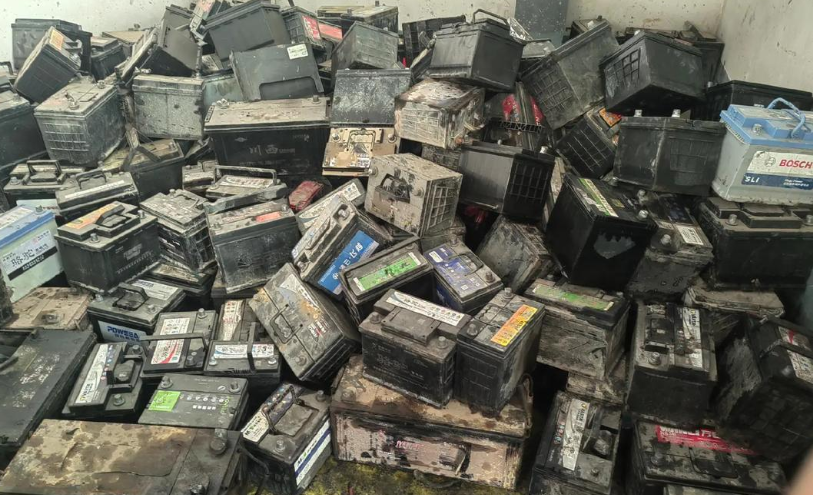
From the perspective of segmented process fields, pretreatment and blackening production have become the mainstream core processes in the industry. By 2025, the market share of this process segment has reached 39.5%, firmly ranking first in the battery recycling process track, becoming a core technology system supporting the large-scale development of the industry, and also confirming the core position of refined and standardized pretreatment processes in the battery recycling process.
From the perspective of the increase in the stock of waste batteries, the supply of recycled raw materials in the market will continue to expand significantly. As the stock of electric vehicle batteries gradually enters the retirement cycle, the volume of lithium-ion batteries reaching the end of their lifespan is rapidly increasing. By 2024, the global retired lithium-ion battery volume will be about 200000 tons, and it is expected to climb to over 1.1 million tons by 2030. Within six years, the stock of waste batteries will increase more than five times, providing sufficient raw material guarantee for the battery recycling industry and continuously consolidating the foundation for the industry’s large-scale development.
The explosive growth of market size and waste material volume has put forward higher requirements for the technical capabilities and production standards of battery recycling enterprises. Safe and compliant emission control, refined battery dismantling processes, efficient crushing and processing technologies, and high-purity material separation capabilities have become key cores for recycling enterprises to establish themselves in the market and enhance their core competitiveness, directly determining the production efficiency, resource recovery rate, and economic benefits of projects.
We can provide a professional and mature complete solution for electric vehicle battery recycling, targeting the core needs and technical pain points of the industry. It covers two major battery pack discharge processing systems: automated and fully automated, and is suitable for recycling production lines of different scales and scenarios. At the same time, it is equipped with a complete physical recycling pipeline, which can efficiently complete the fine separation and recycling of various battery materials such as black matter, copper, aluminum, iron, plastic, etc. The entire process adopts physical recycling technology, which is compliant with environmental protection, has high recycling rate, controllable cost, and adapts to the standardized production needs of the industry.
It is worth noting that batteries with different raw materials and chemical systems have significant differences in the suitable recycling processes and profit models. The mainstream lithium iron phosphate (LFP) and ternary lithium (NMC) batteries differ in structural characteristics, material composition, and recycling difficulty. Therefore, it is necessary to customize specialized process plans and conduct special economic evaluations to ensure efficient project implementation and stable profitability.