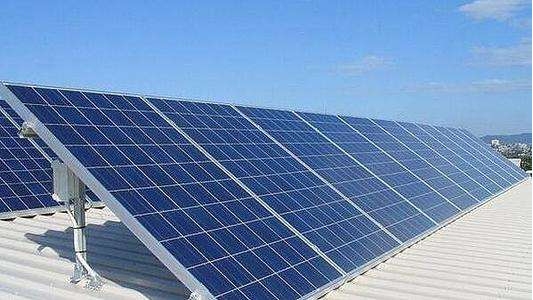
With the rapid development of the global photovoltaic industry, early photovoltaic modules have gradually entered the retirement cycle, and the industry expects that the global retirement of waste photovoltaic panels will exceed 8 million tons by 2030. Waste photovoltaic panels are rich in valuable resources such as silicon, silver, copper, aluminum, etc. If disposed of arbitrarily, it not only causes resource waste, but also contains harmful substances that can pollute soil and water sources. In this context, the dismantling equipment for waste photovoltaic panels has become the core equipment for the green and circular development of the photovoltaic industry, combining environmental protection needs with broad market opportunities.
1、 Core Disassembly Process and Flow
At present, the mainstream industry adopts dry physical dismantling technology, which has no chemical pollution and is divided into two major stages: pretreatment and crushing and sorting. The process is simple and efficient. Preprocessing includes four basic steps: dismantling the aluminum frame, peeling off the junction box, removing the surface glass, and finely sorting the glass.
Complete crushing and sorting assembly line process: Waste photovoltaic panels are first roughly crushed by a shredder, and then broken up by a dedicated crusher to separate EVA film from silicon wafers; The material is fed into the collector through an induced draft fan for preliminary sorting and extraction of silicon material; After ultrafine grinding, the remaining mixture enters the airflow vibration sorting screen through a closed fan, and metal and plastic are separated by wind and vibration, while dust is collected by a matching dust removal system. The entire equipment can efficiently separate recyclable materials such as aluminum frames, photovoltaic glass, silicon powder, copper powder, EVA plastic powder, etc.
2、 Opportunities for industrial development
At the policy level, the continuous implementation of policies such as dual carbon targets and solid waste resource utilization has forced the standardized development of the photovoltaic recycling industry, and the demand for equipment in the market has steadily expanded. At the economic level, the cost of purifying renewable resources from photovoltaic panels is much lower than that of extracting primary minerals, with stable profit margins and outstanding industrial value. At the track level, the recycling and dismantling of photovoltaic terminals belongs to the emerging blue ocean field, with few companies entering the market and sufficient gaps in equipment manufacturing and recycling processing markets. It is a key development direction for the circular economy.
3、 Existing challenges in the industry
Technically, the multi-layer structure of photovoltaic panels is tightly bonded, making it difficult to sort materials with high precision. It requires high equipment processes and dust removal systems, and has a high threshold for technological upgrades. In terms of cost, fully automated dismantling equipment requires a large one-time investment and demands high financial strength from small and medium-sized practitioners. On the system level, the supply of distributed photovoltaic panels is scattered, and the recycling, warehousing, and transportation systems are not yet perfect, making it difficult to ensure stable supply. At the same time, the purification standards in the industry are uneven, and most equipment can only recycle basic materials. The high-value utilization rate of precious metals is low, and increasingly strict environmental standards have also increased equipment research and operation costs.
4、 Industry Development Trends
In the future, the dismantling industry of waste photovoltaic panels will upgrade towards intelligence, high value, and zero emissions. The equipment will be equipped with an intelligent sorting system to achieve automated unmanned operation, greatly improving sorting accuracy and efficiency; The process will gradually achieve full component recovery, deeply explore the value of precious metals such as silver, and enhance overall economic benefits; The production line will be fully enclosed and integrated with dust removal to eliminate secondary pollution, achieve zero waste clean production, and become an important pillar of green energy circular economy.