In today’s booming new energy industry, lithium batteries have become an indispensable energy carrier in fields such as electric vehicles and electronic products. However, as the service life expires, if a large number of waste lithium batteries are not properly disposed of, the heavy metals and electrolytes in them will cause serious pollution to soil and water sources. What is even more worrying is that the natural degradation of an ordinary lithium battery takes up to 500 years, and improper disposal can also cause safety hazards such as fires and explosions.
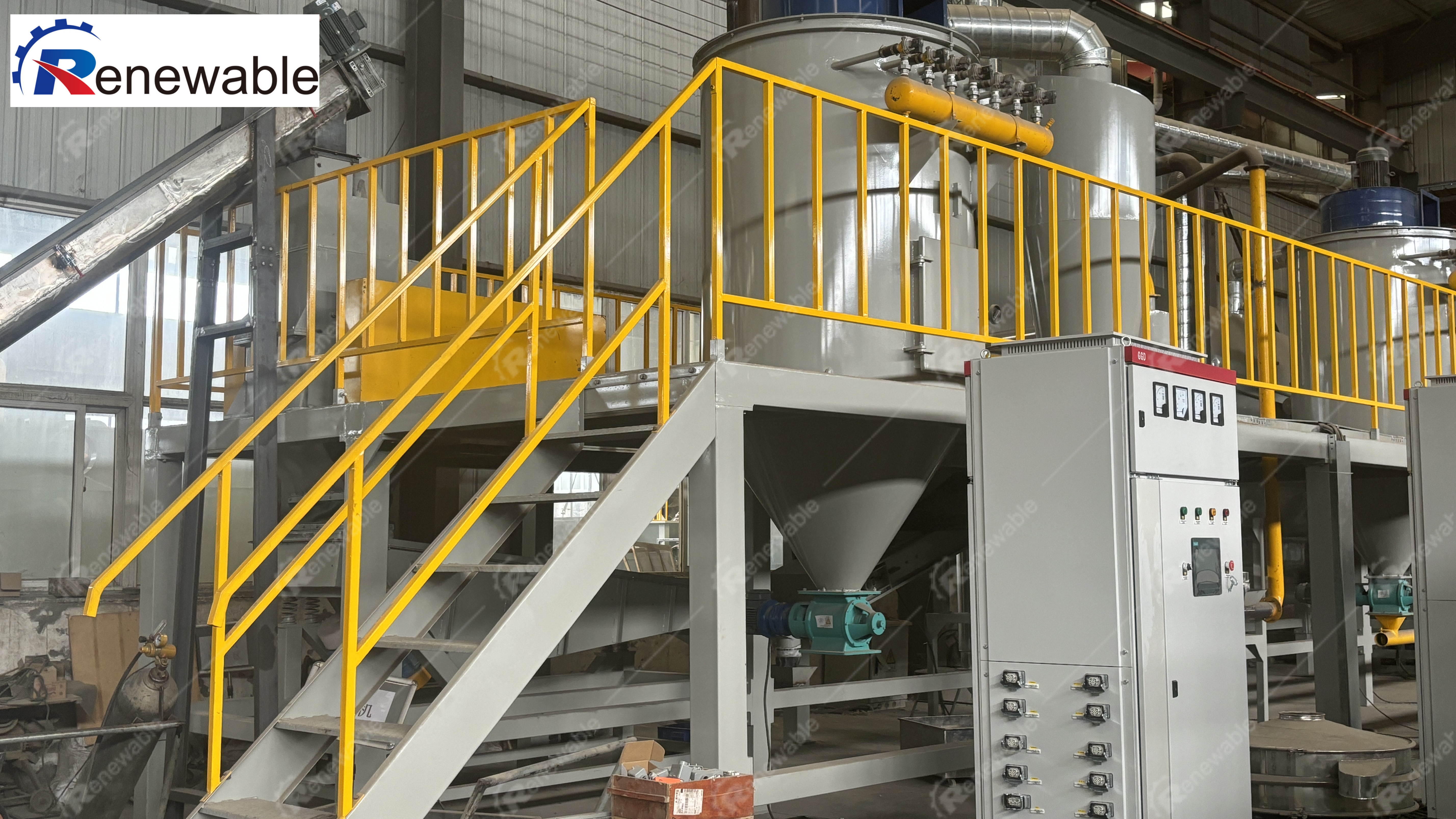
The processing flow of waste lithium battery crushing and sorting equipment: Firstly, soak and discharge the battery to eliminate hidden dangers; The preprocessed lithium batteries are sent to a shredder for shredding. The shredded batteries are then sent to a dedicated crusher for crushing, where the positive and negative electrode sheets and separator paper inside the batteries are dispersed. The dispersed materials are then sent to a collector through an induced draft fan and purified by a pulse dust collector. The materials entering the collector are then sent to an air flow sorting screen through a closed fan, where the separator paper in the positive and negative electrode sheets is collected through air flow and vibration. At the same time, the materials generated by the air flow sorting machine are collected. The mixture is then subjected to a combination of vertical vibration crushing, vibration screening, and air flow sorting processes to separate and recover the positive and negative electrode components of waste lithium batteries. At the same time, the system is equipped with a triple dust removal and purification device, which can effectively collect and treat the dust and harmful gases generated during the process, ensuring that emissions fully comply with international environmental standards.
The promotion and application of waste lithium battery recycling equipment not only solves the problem of electronic waste pollution, but also opens up a green channel for resource regeneration. The separated and purified metal materials have extremely high market value, and the recycling process itself can also create considerable economic benefits. This is not only a major breakthrough in environmental protection, but also a strategic choice for achieving sustainable resource utilization!