Under the promotion of the “dual carbon” target, the installed capacity of photovoltaics in China continues to rise, and the first batch of large-scale applied photovoltaic modules have entered the scrap period. If these waste photovoltaic panels containing materials such as glass, metal, and silicon wafers are not disposed of properly, they will not only cause resource waste, but also pose serious environmental hazards. Scientific recycling and disposal of waste photovoltaic panels has become an important link in promoting the sustainable development of the new energy industry.
Modern photovoltaic panel recycling adopts intelligent processing technology: firstly, aluminum frames, junction boxes and other components are separated through automated dismantling lines; Subsequently, low-temperature crushing technology was used to decompose the laminated components, avoiding harmful gases generated by the high-temperature decomposition of EVA film; Through advanced technologies such as photoelectric sorting and eddy current sorting, efficient separation of materials such as glass, silicon wafers, and copper can be achieved, with a material recovery rate of over 90%. The entire equipment is equipped with a complete dust removal and exhaust gas treatment system to ensure that the production process meets environmental standards.
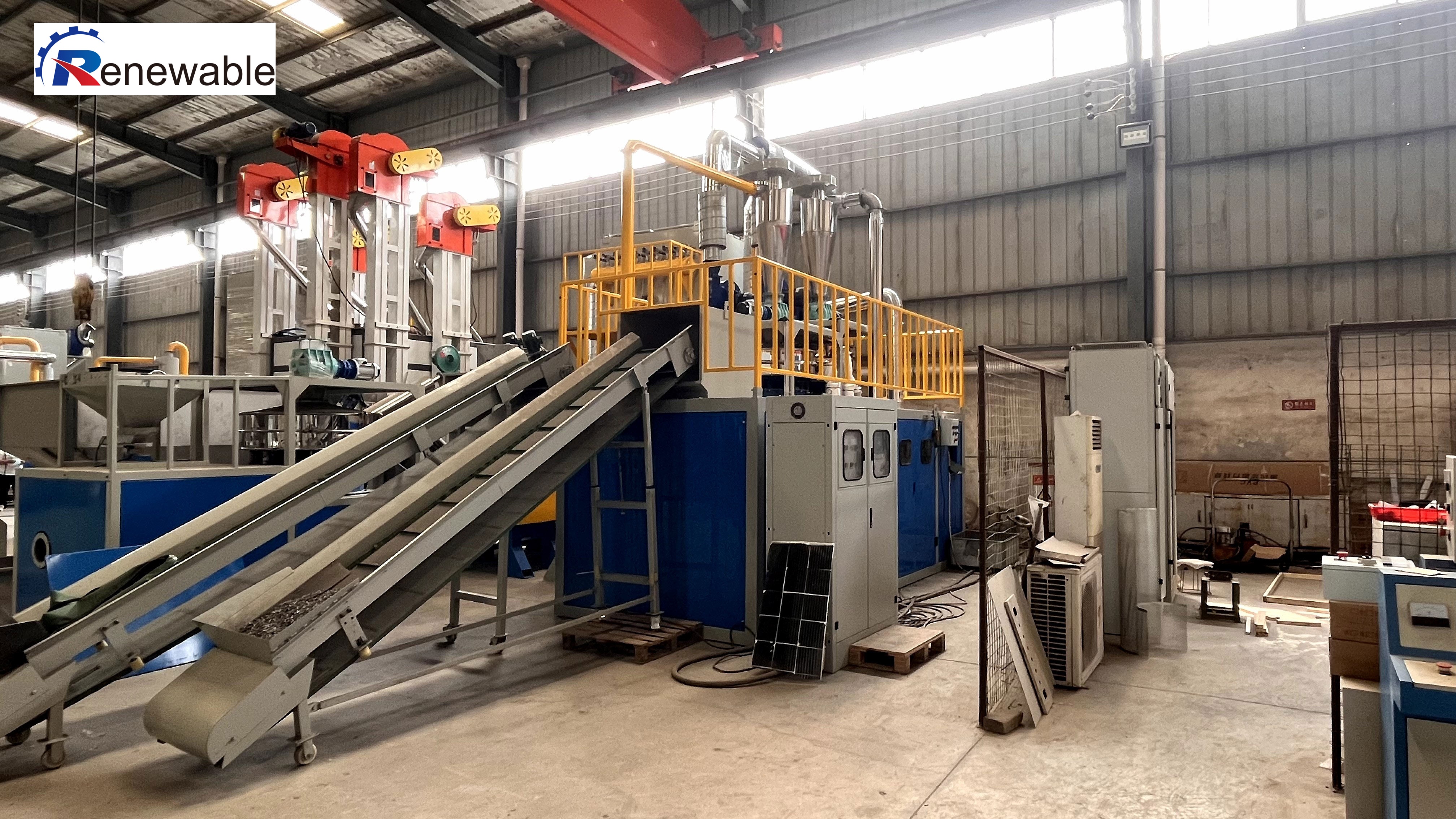
Innovative recycling technology for waste photovoltaic panels brings them back to life: recycled glass can be processed into micro powder for use in building materials; Silicon wafers can be reused in photovoltaic manufacturing after purification; Metal materials such as aluminum frames can be directly recycled back into the furnace. With the continuous breakthroughs in recycling technology and the improvement of policy systems, the photovoltaic panel recycling industry is entering a period of rapid development, providing strong support for building a green, low-carbon and circular economy system.