In the wave of global energy transition, the photovoltaic industry is experiencing explosive growth. According to statistics, by 2030, approximately 8 million tons of scrapped photovoltaic modules will be produced globally. If these “retired” photovoltaic panels are not handled properly, they will not only waste valuable resources but also release harmful substances such as lead and cadmium. By adopting innovative physical recycling processes, a material recovery rate of over 95% can be achieved, while reducing carbon emissions by over 70%. How to achieve green and low-carbon recycling has become a global issue.
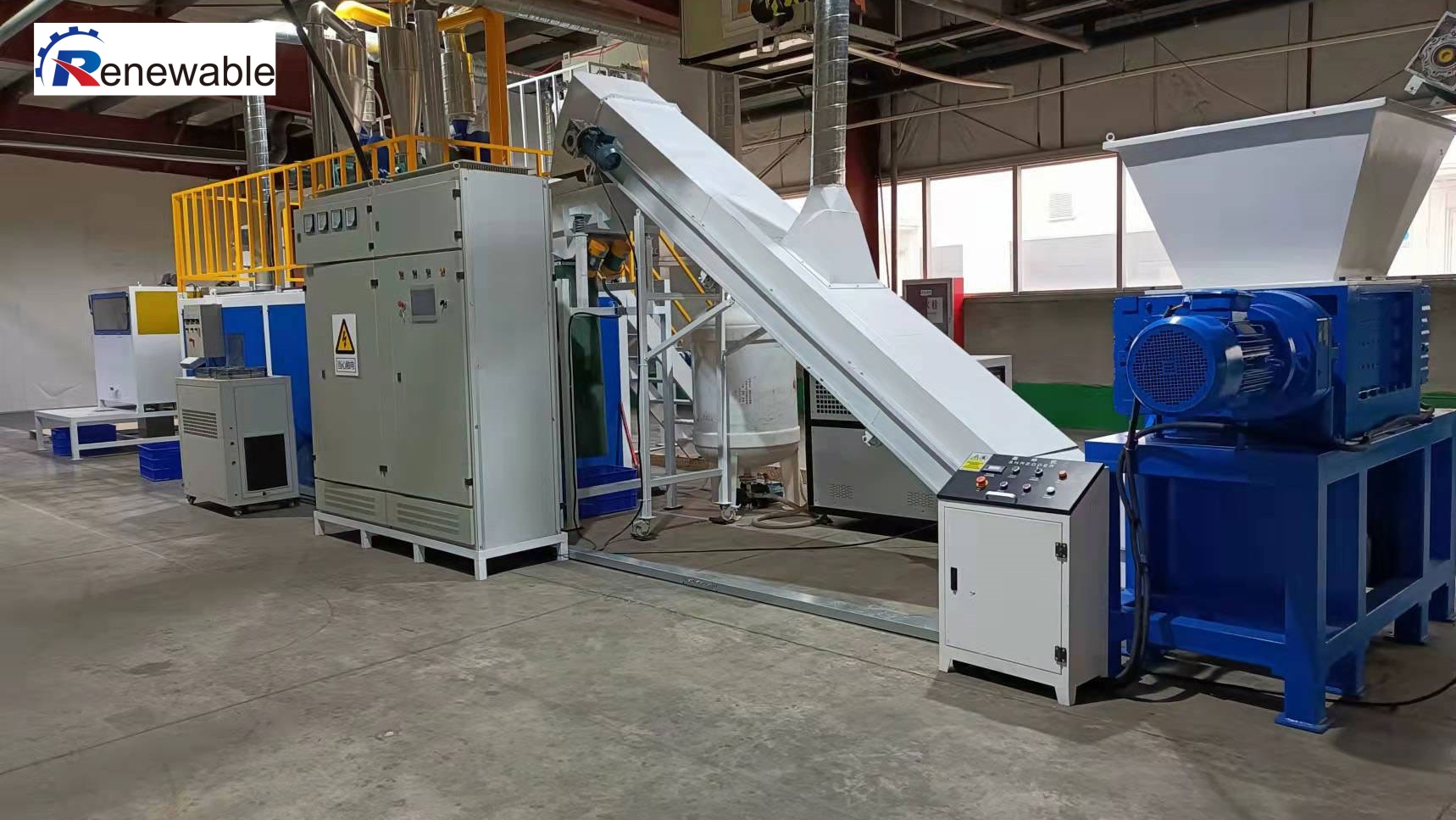
Using physical processing methods for reuse is the greenest and low-carbon scientific method for recycling waste photovoltaic modules. Firstly, the scrapped photovoltaic panels are sent to a shredder for shredding, and then the shredded materials are further crushed in a dedicated crusher. In this way, the EVA film and monocrystalline silicon wafer are separated, and the separated material enters the collector through the induced draft fan. Next, the materials are sorted, silicon is separated, and the remaining mixture enters a dedicated crusher. Afterwards, the material enters the airflow sorting screen through a closed fan, using airflow and vibration technology to effectively collect metals and plastics, while also collecting dust generated by the airflow sorting machine.
Photovoltaic recycling technology is writing a new paradigm for circular economy. This industrial transformation that deeply integrates technological ethics with business logic not only safeguards green mountains and clear waters, but also reconstructs the symbiotic relationship between humans and resources, setting an innovative benchmark for sustainable development in the era of carbon neutrality. This is not only an inevitable choice to address the challenges of “dual carbon”, but also a strategic layout to seize the opportunities of circular economy.