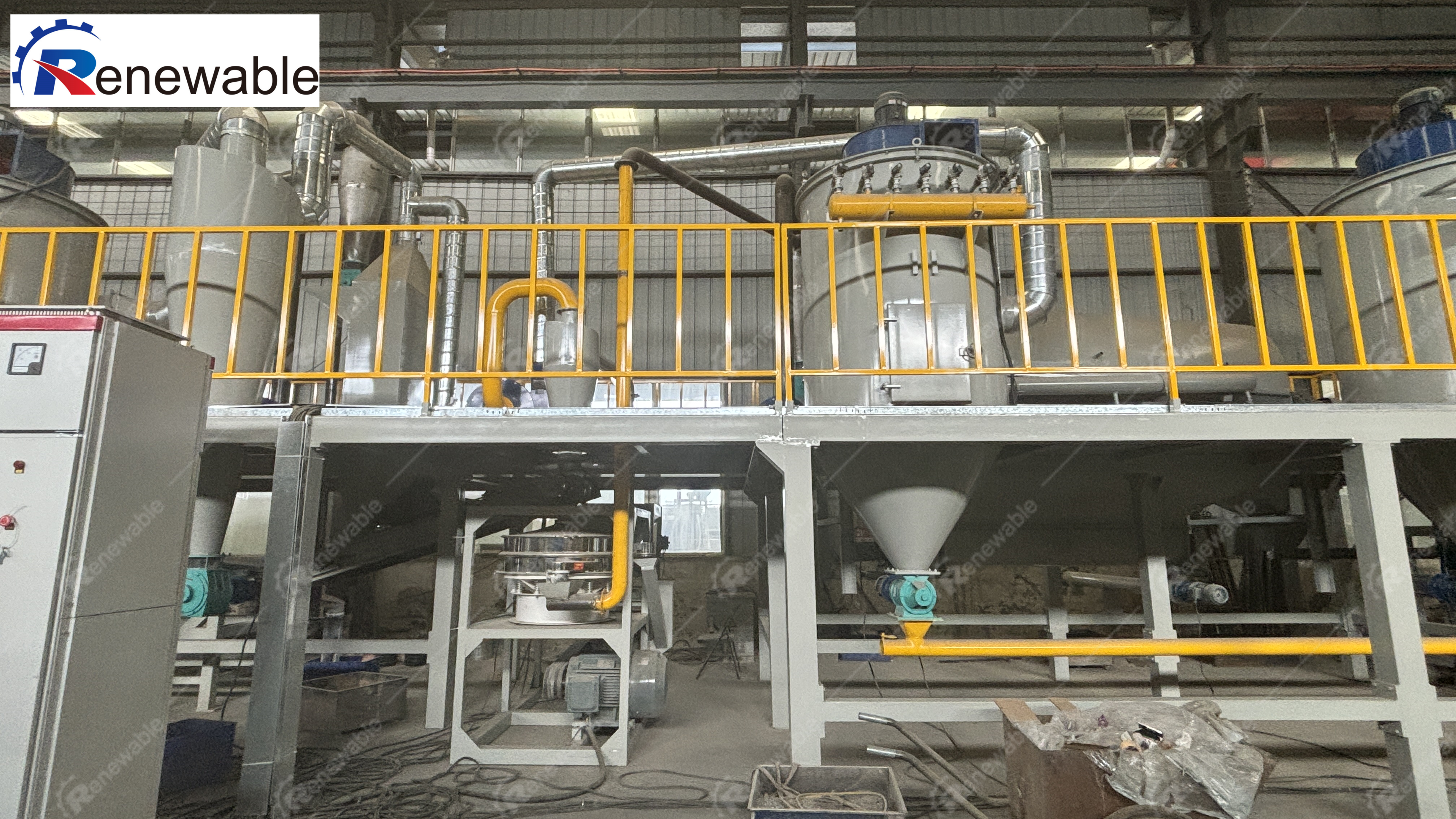
With the continuous development of technology, lithium batteries are reaching their peak period of disposal. So, how can these discarded lithium batteries be disposed of efficiently and environmentally friendly?
Lithium battery dismantling machine
After being scrapped, waste batteries still retain some residual electricity. Therefore, the pretreatment process includes deep discharge, crushing, and physical sorting. The goal of secondary treatment is to achieve complete separation of positive and negative active materials from the substrate. Common methods include thermal treatment, organic solvent dissolution, alkaline solution dissolution, and electrolysis. According to the extraction process, battery recycling methods can be mainly classified into three major technologies: dry recovery, wet recovery, and biological recovery.
Dry recovery: refers to the direct recovery of materials or valuable metals without the aid of media such as solutions. The main methods used are physical sorting and high-temperature pyrolysis.
Wet recovery process: After crushing the waste batteries, they are dissolved. Then, using appropriate chemical reagents, metal elements in the leaching solution are selectively separated, producing high-grade cobalt metal or lithium carbonate, etc., which are directly recycled. The wet recovery process is more suitable for recycling waste lithium batteries with relatively simple chemical compositions. Its equipment investment cost is relatively low, making it suitable for the recycling of small and medium-sized waste lithium batteries. Therefore, this method is currently widely used.
3. Biorecovery: The leaching of metals from spent lithium-ion batteries using inorganic acids and Acidithiobacillus ferrooxidans is a challenging process. However, several major difficulties arise from the cultivation of efficient microbial strains, the lengthy treatment period, and the control of leaching conditions