With the rapid development of China’s photovoltaic industry for many years, the first batch of large-scale installed photovoltaic equipment has gradually entered the retirement cycle, and a large-scale wave of photovoltaic panel waste has arrived. Waste photovoltaic modules are no longer considered solid waste, but rather “urban minerals” with high economic value and ecological protection significance. Leveraging the advantages of resource recycling, the photovoltaic panel recycling industry has rapidly emerged as a billion dollar green new track with great growth potential under the dual carbon background.
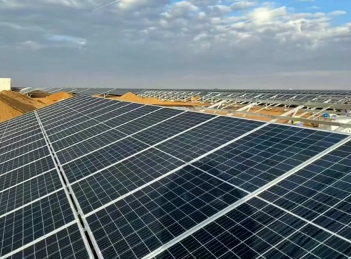
From the perspective of resource reserves and ecological value, waste photovoltaic panels contain abundant recyclable resources and shoulder important environmental protection missions. Data shows that by 2030, China will produce about 1.5 million tons of retired photovoltaic modules, which can be called a “dormant treasure”. These waste modules are rich in various scarce and valuable resources, including 18000 tons of silver, 450000 tons of silicon, 600000 tons of aluminum and other core materials. According to current market prices, the overall economic value will exceed 30 billion yuan. At the same time, photovoltaic modules contain toxic heavy metals such as lead and cadmium. If discarded or disposed of improperly, pollutants can persist in soil and water for a long time, with pollution lasting up to a hundred years, causing sustained damage to the ecological environment. Therefore, standardized and large-scale recycling of waste photovoltaic panels is not only a key measure to activate scarce mineral resources and create economic benefits, but also an inevitable requirement for preventing and controlling environmental pollution and building ecological barriers.
Mature and complete processing technology is the core support for the large-scale implementation of the photovoltaic panel recycling industry. At present, the mainstream industry adopts physical separation processing technology, which is mature, environmentally friendly, and suitable for mass production. It is divided into two core processes and can achieve material refinement and full recycling. The basic physical separation is divided into four steps, which are dismantling the aluminum frame, removing the junction box, peeling off the surface glass, and finely sorting the glass to complete the pre-treatment of photovoltaic panel basic separation. The deep crushing and sorting process further improves resource utilization. The scrapped photovoltaic panels are first shredded by a shredder and then sent to a dedicated crusher for deep crushing, completely breaking down the EVA film and monocrystalline silicon wafer structure; The dispersed material is transported to the collector through a induced draft fan for initial collection, and high-purity silicon material is separated through initial sorting; The remaining mixed materials are sent to a specialized crusher for refined processing, and then transported to an air flow sorting screen through a closed fan. Based on the dual sorting principle of air flow and vibration, metal and plastic materials are accurately separated. At the same time, a dust collection system is installed to strictly control dust pollution throughout the process. The entire process can efficiently separate various reusable raw materials such as aluminum frames, pure glass, silicon powder, copper powder, EVA plastic powder, etc., achieving the resource utilization, harmless and high-value treatment of waste photovoltaic panels.
With the empowerment of the dual carbon policy and technological iteration and upgrading, the market space of the photovoltaic recycling industry continues to expand, and the growth certainty is extremely strong. From the perspective of industry scale, the global photovoltaic recycling market is growing rapidly, and it is expected that the overall market size will exceed 100 billion yuan by 2030. With the increment of retired components, the domestic market will become the core growth pole of the global photovoltaic recycling industry. Technological innovation continues to release industrial dividends. With the widespread popularity of new photovoltaic modules such as heterojunctions and perovskites, a new generation of refined recycling technologies is constantly being implemented. Compared with traditional processes, it can extract 30% more valuable materials, greatly improving resource recovery rates and industrial profitability.
At present, China’s photovoltaic industry has formed a complete manufacturing, installation, and power generation system, and the end of pipe recycling and utilization link is accelerating the filling of the industry chain’s shortcomings. Against the backdrop of the continuous promotion of the “dual carbon” target and the continuous improvement of circular economy policies, the recycling industry of waste photovoltaic panels combines economic, ecological, and social benefits. With outstanding track advantages and huge development potential, it has become the most certain core growth track in the field of green technology, and is expected to grow into a pillar industry of circular economy worth billions in the future.