Against the backdrop of global energy transition and the popularization of electronic devices, the demand for lithium batteries has surged, while key mineral resources such as cobalt, lithium, and nickel are becoming increasingly scarce. At the same time, if a large number of waste lithium batteries are not disposed of properly, it will not only cause resource waste, but may also pose a threat to the environment and human health due to electrolyte leakage, heavy metal pollution, etc. Therefore, developing efficient and environmentally friendly lithium battery recycling technology has become an important way to alleviate resource crisis and promote green economy.
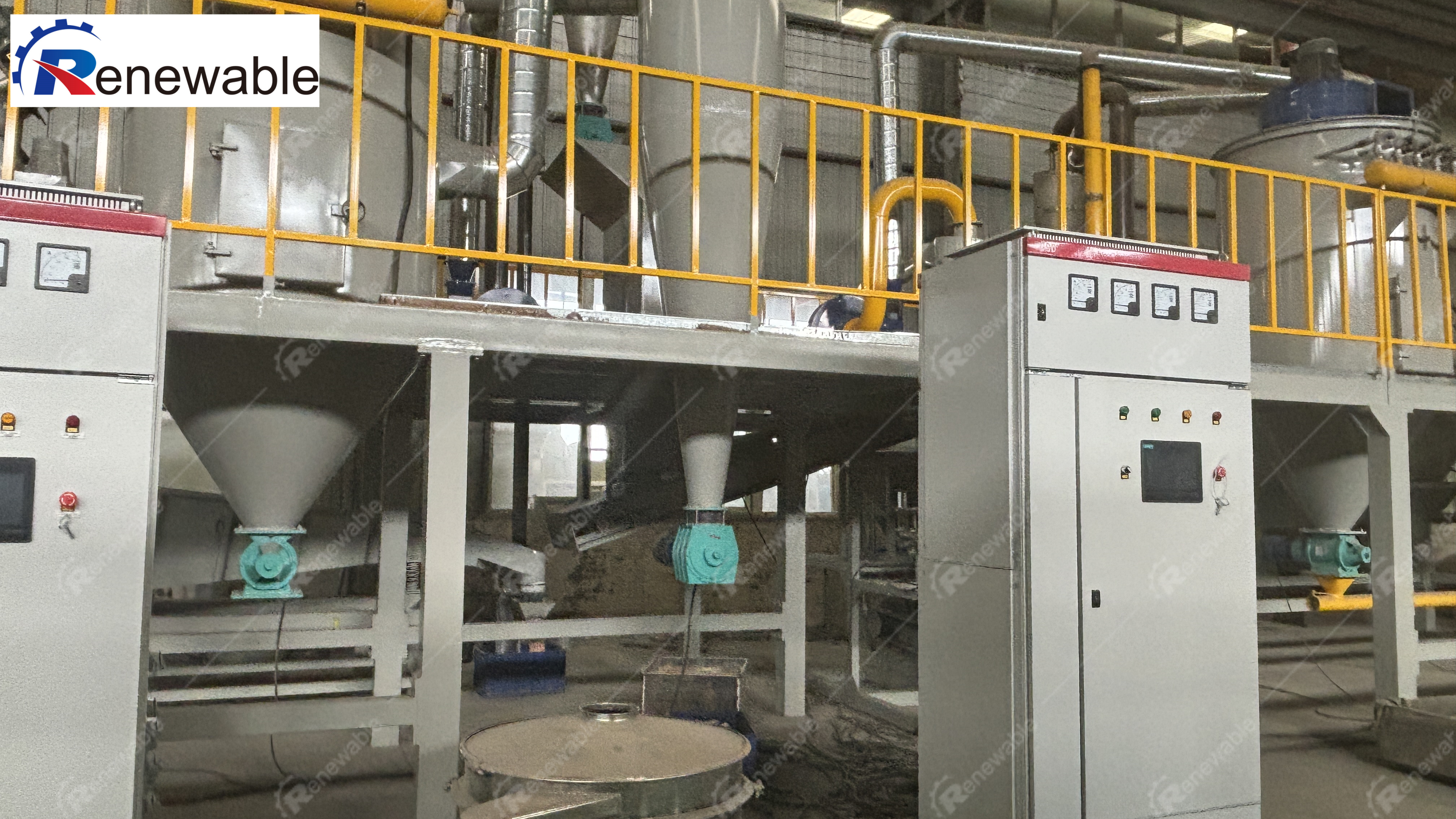
The process flow of the equipment for recycling and processing waste lithium batteries is as follows:
1. Soak and discharge the battery to eliminate potential hazards;
2. The preprocessed lithium batteries are fed into a shredder for shredding, and the shredded batteries are fed into a dedicated crusher for further crushing,
3. Disperse the positive and negative electrode sheets and separator paper inside the battery, and the dispersed materials are fed into the collector through an induced draft fan,
4. Then, the dust generated during the crushing process is collected and purified by a pulse dust collector,
5. The material entering the collector enters the air flow sorting screen through a closed fan, and the diaphragm paper in the positive and negative electrode pieces is collected by the air flow and vibration. At the same time, the collection generated by the air flow sorting machine is carried out, and the mixture is then subjected to a combination of vertical vibration crushing, vibration screening, and air flow sorting processes to separate and recover the materials that make up the positive and negative electrodes of waste lithium batteries. Ultimately, through physical separation technology, high-purity metals such as lithium, cobalt, and nickel can be efficiently recovered, achieving resource regeneration.
The recycling of lithium batteries not only reduces dependence on primary minerals and lowers the cost of importing raw materials, but also reduces electronic waste pollution. In the future, with the advancement of intelligent sorting technology and green metallurgical processes, the recycling efficiency of lithium batteries will be further improved, providing a solid guarantee for the sustainable development of the new energy industry.