Copper is an indispensable core non-ferrous metal in industrial production. Boasting excellent electrical conductivity, corrosion resistance and ductility, it is widely applied in various fields including wires and cables, electronic equipment, automobile manufacturing, and communication engineering. Traditional copper mining and refining processes cause irreversible environmental problems such as vegetation destruction and soil and water pollution. In contrast, the recycling and reutilization of waste wires and cables serve as a core approach to realize the cyclic utilization of copper resources, reduce environmental pressure and practice green and sustainable development. In the recycling and processing of waste cables, maximizing copper output, minimizing copper loss and improving copper purity are the key to enhancing the economic benefits and resource utilization rate of recycling. Based on the mainstream dry physical recycling technology, the copper yield and recycling quality of waste wires and cables can be comprehensively improved through a series of measures including raw material pretreatment, equipment optimization, process upgrading, fine separation and standardized operation and maintenance.
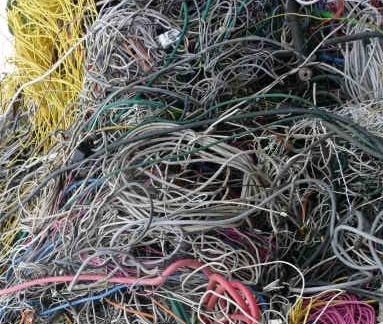
First of all, conduct classified sorting of raw materials. With the combination of manual work and auxiliary equipment, waste wires and cables are classified by thickness, material and service condition, covering various types such as thick cables, thin mixed wires, communication cables and automobile wiring harnesses. Non-copper impurities including mixed aluminum wires, iron wires, plastic debris, rubber blocks, sediment and stones are removed. Cables of different specifications require different crushing forces and separation parameters. Classification treatment avoids the loss of thin copper wires caused by excessive crushing and residual copper cores caused by incomplete crushing of thick cables, ensuring the full recycling of copper resources from the source.
Secondly, complete cleaning and pretreatment processing. Professional cleaning and decontamination are carried out on waste cables with oil stains, silt and aged coatings on the surface to prevent impurities from wrapping copper cores and causing subsequent separation failure. For industrial waste cables with thick insulating layers and armored layers, the outer armor and heavy protective sleeves are stripped in advance to reduce the crushing load of the dry copper rice machine and ensure the thorough separation of copper cores and insulating plastics. Meanwhile, severely oxidized and corroded waste materials are sorted out for separate treatment to prevent copper oxide scraps from being lost along with waste residues.
The dry copper rice machine is the core equipment for green recycling of waste cables. It adopts a pollution-free process of dry physical crushing and wind gravity separation to realize efficient separation of copper and plastic. The adaptability and operating condition of the equipment directly determine the copper recycling yield. Compared with traditional incineration and wet processes, the dry process produces no waste water or waste gas pollution and enables the simultaneous recycling of copper rice and plastics with a higher resource utilization rate. Equipment optimization can further improve production capacity advantages.
First, adopt modular intelligent crushing equipment. Self-adaptive adjustable crushing units are selected to automatically adjust the crushing force, rotating speed and tool spacing according to cable specifications. A gentle crushing mode is adopted for thin mixed wires to prevent copper cores from being excessively crushed into micro-particles and lost with wind; higher crushing torque is applied to thick cables and thick-wall cables to completely crush insulating layers and eliminate wrapped residual copper cores. In addition, crushing tools are regularly inspected, polished and replaced to avoid insufficient crushing and copper-plastic adhesion caused by passivated tools, ensure the uniformity of crushed particles and lay a solid foundation for subsequent separation.
Second, upgrade the supporting multi-stage separation devices. Single conventional gravity separation cannot achieve complete separation. On the basis of the original wind gravity separation, high-voltage electrostatic separation and photoelectric separation modules can be added to form a three-stage separation system of “gravity separation + electrostatic fine separation + photoelectric impurity removal”. Gravity wind separation preliminarily separates large-particle copper rice and plastic debris; high-voltage electrostatic separation screens copper particles adhered with trace plastics; photoelectric separation accurately removes dissimilar metal impurities such as aluminum, lead and iron. This thoroughly solves the problems of incomplete copper-plastic separation and impurity doping in traditional separation, and greatly improves the recovery rate and purity of copper rice.
The dry recycling process for waste wires and cables realizes the dual recycling of copper and plastics and maximizes the application value of equipment. While increasing copper yield, standardizing the classified recycling of plastics and waste residues can build a complete resource recycling system. Adopting the dry physical separation process completely eliminates polluting recycling methods such as incineration and chemical corrosion. The whole process achieves harmless and green recycling treatment with no discharge of waste water, waste gas or waste residue.
Meanwhile, establish a large-scale and standardized recycling process, expand the recycling coverage of waste wires and cables, and uniformly collect various mixed waste wires and waste cables to prevent the loss of scattered waste materials. Through large-scale processing and refined treatment, the total output of recycled copper can be continuously increased, the reliance on primary copper mining can be reduced, ecological damage can be mitigated, and the green, low-carbon and sustainable development of the industrial sector can be boosted.