Against the backdrop of in-depth transformation of the global energy structure and continuous advancement of the dual-carbon strategy, the photovoltaic (PV) industry has achieved large-scale and explosive growth and become a core pillar of the clean energy system. The designed service life of PV modules is generally 25 to 30 years. Early batch-operated PV power stations have gradually entered the decommissioning cycle, generating a large number of waste PV panels and creating an urgent industry demand for the harmless treatment and resource recycling of PV panels. As the core and key equipment in the industrial chain of PV module recycling and utilization, the PV panel separator enables the refined dismantling, material sorting and resource regeneration of waste PV panels, filling the last-mile gap in the green development of the PV industry. Therefore, the industry boasts huge development potential and broad prospects. This paper comprehensively analyzes the development prospects of the PV panel separator industry by combining the current technological status, market environment, development opportunities, existing challenges and future trends.
As global PV installed capacity enters the Terawatt (TW) era, the wave of PV module decommissioning is accelerating, and the stock of waste PV panels continues to surge. According to forecasts by the International Renewable Energy Agency (IRENA), the global scrapped volume of PV panels will reach 8 million tons in 2030, and the cumulative waste volume will hit 78 million tons in 2050, resulting in rising pressure on waste PV module disposal. China’s PV industry started to develop after 2010 and ushered in an installation boom in 2012. At this stage, it has gradually entered a centralized decommissioning period, and the domestic waste PV panel recycling market has officially grown from the initial stage to a rapid growth stage.
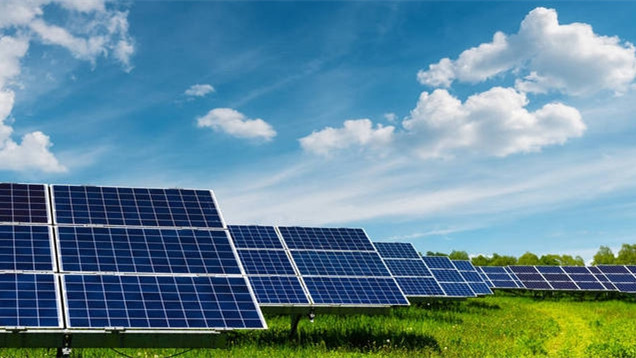
PV modules contain various recyclable scarce resources including glass, aluminum frames, silicon wafers, silver paste, copper and EVA plastic. Traditional disposal methods such as landfilling and incineration will not only cause severe waste of strategic resources including silicon, copper and silver, but also produce massive pollutants that lead to soil and water pollution, violating the concept of green and low-carbon development. In this context, national and local authorities have successively issued policies related to PV recycling, solid waste treatment and circular economy, forcing the PV industry to build a closed-loop recycling system. As the core equipment for the harmless, resource-based and large-scale treatment of waste PV panels, the PV panel separator has become the key to opening up the industrial chain of PV circular economy, with continuous growth in market rigid demand.
In terms of market scale, the PV recycling industry has been recognized as a blue ocean track in the PV sector. According to the 2024 China PV Recycling and Circular Economy White Paper, China’s cumulative market scale of PV recycling will reach approximately 26 billion yuan in 2030 and exceed 420 billion yuan in 2050. The continuously expanding trillion-level market space provides solid market support for the development of the PV panel separator industry.
At present, domestic PV panel recycling mainly adopts the physical sorting technology route. Compared with chemical recycling and high-temperature cracking processes, it has the advantages of zero pollution, low cost, high material purity and adaptability to large-scale production. It is also the core technical direction of current PV panel separators, realizing harmless and refined dismantling and recycling throughout the whole process.
The standardization level of the entire waste PV panel recycling and separation process has become mature, which is divided into two major modules: pre-dismantling and post crushing and sorting. In the pre-dismantling stage, pretreatment operations including frame removal and junction box removal are carried out to eliminate external auxiliary components of PV panels. Subsequently, waste PV panels are sent to a shredder for primary shredding, and then finely crushed by a special crusher to completely break the composite structure of EVA film and monocrystalline silicon wafers. The crushed materials are conveyed to a collector through an induced draft fan for preliminary collection before entering the multi-stage sorting process. After refinement by a special pulverizer, the mixed materials are stably transported to an airflow vibrating screen through an air lock. Adopting the dual sorting principle of airflow and vibration, the equipment accurately separates metal, plastic and dust materials. A supporting dust removal system is finally equipped to collect production dust and achieve clean production.
The complete set of PV panel separation equipment realizes full classified recycling of materials, producing multiple reusable raw materials such as aluminum frames, high-purity glass, silicon powder, copper powder and EVA plastic powder. All recycled materials can be reused in industries including PV production, metallurgy and plastic processing, which greatly improves resource utilization efficiency and truly realizes turning waste into treasure.
Mainstream physical PV panel separators abandon the extensive traditional dismantling mode. The whole process adopts dry operation with no waste water or waste gas discharge, complying with environmental protection production standards. Featuring a high degree of automation, the equipment supports continuous mass production and greatly reduces labor costs. Meanwhile, the continuous improvement of sorting accuracy and material recovery rate effectively solves the pain points of traditional recycling processes such as material mixing, resource waste and secondary pollution, meeting the large-scale production needs of small, medium and large recycling enterprises.
Overall, driven by policy dividends for PV circular economy, massive decommissioning market demand and prominent resource regeneration value, the PV panel separator industry presents a sound long-term development trend and serves as a high-potential, high-certainty blue ocean track. Despite short-term problems including imperfect industry standards, pending technological upgrading and immature industrial chain, the industry’s development pain points will be gradually resolved with continuous technological iteration, standardized policies and accelerated improvement of the industrial chain.
For equipment manufacturers, it is necessary to increase investment in research and development, focus on the upgrading of core technologies such as high-precision sorting, intelligent control, green and low-consumption production, optimize equipment performance and production processes to adapt to large-scale mass production requirements. Meanwhile, enterprises should actively align with industry standards, develop standardized and high-quality equipment, and enhance market competitiveness. For new investors entering the market, it is advisable to seize the industry window period to deploy the supporting equipment track for PV recycling in advance and capture the dividends of the trillion-level market.
In the future, PV panel separators will become core supporting equipment for the green circular economy of the PV industry. They can effectively alleviate the shortage of domestic scarce resources, reduce the environmental risks of the new energy industry, and provide important support for the achievement of global dual-carbon goals and the high-quality and sustainable development of the PV industry.