In 2026, spot silver prices have repeatedly set record highs, briefly approaching $121 an ounce — nearly ten times the low of five years ago. The world is chasing this “poor man’s gold,” yet few connect it to the solar panels aging on rooftops everywhere. The truth is, that is exactly where a long-overlooked “urban silver mine” is hiding.
Silver makes up just 0.1% of a solar panel’s weight, yet accounts for more than 40% of its recoverable value.
A standard crystalline-silicon panel is roughly three-quarters glass. The rest is an aluminum frame, copper wiring, silicon cells, and the EVA laminate that welds it all together. The real value hides in the least conspicuous places: the silver electrodes, high-purity silicon, and copper. But for more than two decades, vast numbers of retired panels were stripped of their aluminum frames and crushed into low-grade glass cullet — while the silver and silicon, the most valuable parts, were quietly sent to landfill.
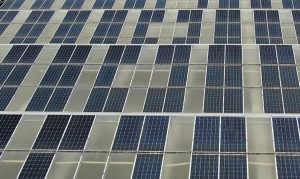
The industry has an ugly but accurate name for this: “downcycling.”
It recovers the heaviest yet least valuable fractions, and throws away the lightest yet most valuable ones. From January 2026, the EU’s updated WEEE Directive tightened the screws: a minimum 85% collection rate and 80% material recovery rate for end-of-life panels. China, too, has written a target of no less than 85% PV-module recycling by 2028 into policy. The escape routes of landfill and incineration are being closed, regulation by regulation.
The real challenge is not “whether to recycle,” but “how to extract the silver and silicon cleanly.”
A line that actually pays is not crude crushing — it is an integrated process of automatic de-framing, glass separation, crushing and sorting, and metal-and-silicon refining: first separating the EVA laminate, glass, and cells without damage, then precisely isolating silver, silicon, copper, and aluminum one by one. Through this, a retired panel is no longer waste — it becomes furnace-ready feedstock of high-purity silicon, recovered silver, copper, aluminum, and glass, transformed from a hazardous liability into high-grade raw material.
The scale of this mine is far larger than most people imagine.
IRENA estimates that cumulative retired PV modules will reach around 8 million tonnes globally by 2030, and 78 million tonnes by 2050; the value of recovered materials will hit $6 billion a year by 2040 and exceed $20 billion by 2050. More significantly, systematically recycled panels could theoretically meet about 70% of future solar manufacturing’s silver demand, along with 20% of its copper, aluminum, silicon, and glass needs.
With silver at a decade high, the retirement wave arriving on schedule, and policy mandates closing in, a “retired solar panel” is no longer scrap — it is an urban mine that yields silver, high-purity silicon, and copper. And what decides whether that mine pays out is the equipment that keeps the silver and silicon from slipping away. The window is now opening for those who act early.