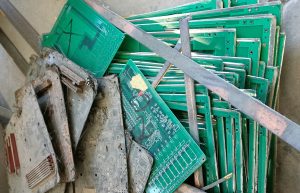
The Revolution of Recycling Waste Circuit Boards: The Green Alchemy of Urban ‘Electronic Mines’

2026-05-08
The recycling and regeneration of waste circuit boards is no longer simply a matter of “picking up scraps”, but a high-precision “green alchemy” that integrates physics, chemistry, and intelligent control. By relying on the physical methods of mechanical crushing and high-voltage electrostatic separation, we can efficiently decompose this complex “electronic mineral” into high-purity metal powder and resin powder, truly achieving the transformation of resources from “electronic waste” to “urban minerals”.
Recycling Waste Circuit Boards
The following is a deep technical analysis based on modern mainstream processes (using physical methods as an example):
1. Core process: three-stage crushing and fine dissociation
Circuit boards are composed of various materials such as glass fiber, resin, and copper foil. To achieve high-purity separation, the core lies in “dissociation” rather than “crushing”. Modern devices typically adopt a three-level processing strategy:
Level 1: Coarse crushing (biaxial shredding)
This is the key to preprocessing. In response to the tough and fiber containing characteristics of circuit boards, the equipment adopts a low-speed high torque dual axis shredder to crush the circuit boards into blocks.
Second level: medium to fine crushing (hammer crushing)
The material enters the high-speed rotating hammer crusher, which further crushes the material into fine particles through impact and friction, promoting the dissociation of metal and non-metal (resin).
Third level: Fine crushing (high-speed turbine crusher)
This is the core step in achieving the separation of metal and non-metal monomers. The material is crushed into a powder of 80-120 mesh by the shear and impact forces generated by the high-speed turbine. At this point, copper metal has completely become spherical or sheet-like particles, while resin and glass fibers become flocculent powders.
2. Sorting process: the “black technology” of physical purification
After the material reaches the “monomer dissociation” state, the next sorting step reflects the technical content:
Airflow sorting (air sorting): By utilizing the difference in suspension velocity between metal and resin powder in the airflow, lightweight resin powder is separated from heavier metal mixtures. The airflow sorting rate of excellent equipment can reach over 97%.
High voltage electrostatic sorting: This is the key to further purification. The material passes through a high-voltage electric field (15-30kV), and metal particles with good conductivity will acquire charges and be adsorbed on the electrode, while non-conductive resin will directly fall down. This process can increase the recovery rate of metals (especially copper) to over 99%.
3. Environmental Protection and Deep Processing: Closed loop and Value added
Dust control (closed-loop production): As the entire process involves crushing, dust control is crucial. The modern production line is equipped with pulse bag dust collectors, with a filtration accuracy of up to 0.3 μ m and a dust removal efficiency of over 99%, ensuring that the workshop is dust-free and meets the GB16297 atmospheric emission standards.
4. Industry prospects and data
The economic and environmental benefits of this’ alchemy ‘are enormous. According to statistics, the gold content in 1 ton of waste mobile phone circuit boards (about 10000 mobile phones) is even higher than that in 1 ton of gold ore. And the standardized physical recycling line can handle a unit processing capacity of 2-5 tons/hour, with a comprehensive resource utilization rate of over 95%

The Revolution of Recycling Waste Circuit Boards: The Green Alchemy of Urban ‘Electronic Mines’

The recycling and regeneration of waste circuit boards is no longer simply a matter of “picking up scraps”, but a high-precision “green alchemy” that integrates physics, chemistry, and intelligent control.

By relying on the physical methods of mechanical crushing and high-voltage electrostatic separation, we can efficiently decompose this complex “electronic mineral” into high-purity metal powder and resin powder, truly achieving the transformation of resources from “electronic waste” to “urban minerals”.

The following is a deep technical analysis based on modern mainstream processes (using physical methods as an example):

1. Core process: three-stage crushing and fine dissociation

Circuit boards are composed of various materials such as glass fiber, resin, and copper foil. To achieve high-purity separation, the core lies in “dissociation” rather than “crushing”.

Modern devices typically adopt a three-level processing strategy:

Level 1: Coarse crushing (biaxial shredding)

This is the key to preprocessing.

In response to the tough and fiber containing characteristics of circuit boards, the equipment adopts a low-speed high torque dual axis shredder to crush the circuit boards into blocks.

Second level: medium to fine crushing (hammer crushing)

The material enters the high-speed rotating hammer crusher, which further crushes the material into fine particles through impact and friction, promoting the dissociation of metal and non-metal (resin).

Third level: Fine crushing (high-speed turbine crusher)

This is the core step in achieving the separation of metal and non-metal monomers.

The material is crushed into a powder of 80-120 mesh by the shear and impact forces generated by the high-speed turbine.

At this point, copper metal has completely become spherical or sheet-like particles, while resin and glass fibers become flocculent powders.

2. Sorting process: the “black technology” of physical purification

After the material reaches the “monomer dissociation” state, the next sorting step reflects the technical content:

Airflow sorting (air sorting): By utilizing the difference in suspension velocity between metal and resin powder in the airflow, lightweight resin powder is separated from heavier metal mixtures.

The airflow sorting rate of excellent equipment can reach over 97%.

High voltage electrostatic sorting: This is the key to further purification.

The material passes through a high-voltage electric field (15-30kV), and metal particles with good conductivity will acquire charges and be adsorbed on the electrode, while non-conductive resin will directly fall down.

This process can increase the recovery rate of metals (especially copper) to over 99%.

3. Environmental Protection and Deep Processing: Closed loop and Value added

Dust control (closed-loop production): As the entire process involves crushing, dust control is crucial.

The modern production line is equipped with pulse bag dust collectors, with a filtration accuracy of up to 0.3 μ m and a dust removal efficiency of over 99%, ensuring that the workshop is dust-free and meets the GB16297 atmospheric emission standards.

4. Industry prospects and data

The economic and environmental benefits of this’ alchemy ‘are enormous.

According to statistics, the gold content in 1 ton of waste mobile phone circuit boards (about 10000 mobile phones) is even higher than that in 1 ton of gold ore.

And the standardized physical recycling line can handle a unit processing capacity of 2-5 tons/hour, with a comprehensive resource utilization rate of over 95%

Home whatsapp Mail Inquiry